
Intel hit this year’s CES in Las Vegas with more than one ace in the hole. There were no fewer than nine demos on display powered by Intel hardware, spanning retail, AI, healthcare and more. Oh, and gaming. Of course gaming. One of the biggest splashes at the show overall this year was Intel’s unveiling of its Panther Lake chips, or Intel® Core™ Ultra Series 3 Processors to use their official title. Commercially available from January 27, these miniature mobile computing marvels were billed as much more than the incremental improvement we’re used to seeing with this type of reveal. This is a much bolder leap forward. Why? We’ll get to that.
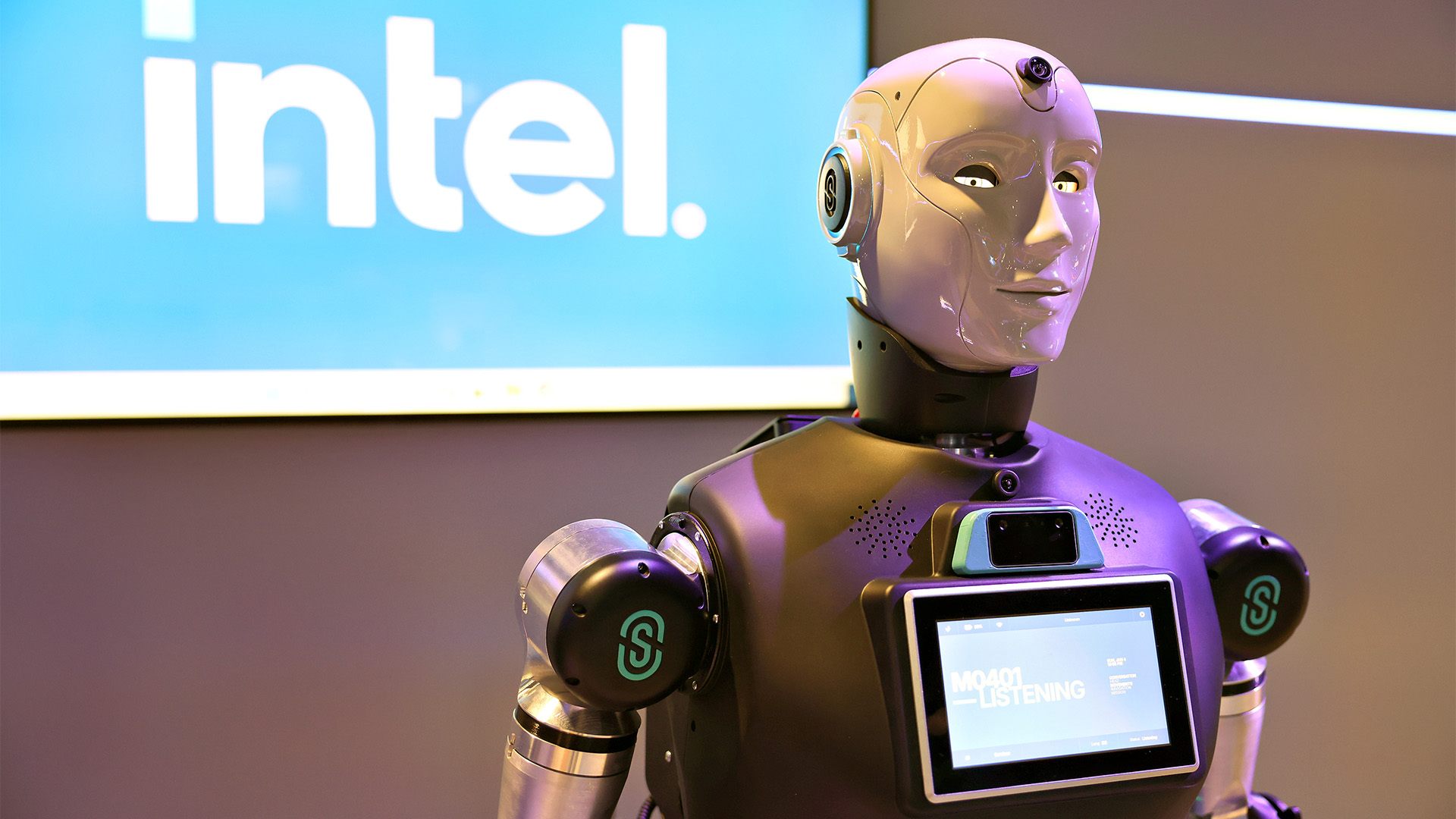
The showfloor at CES is a funfair populated by the progeny of the world’s technological dreamers, and this year was no exception. Among the humanoid robotic faces engaging with starry-eyed visitors was RoBee, the creation of Italian firm Oversonic Robotics. Get past the distraction of its very cool-looking rollerskates (which also equip RoBee with a surprising range of movement), and the AI-powered robot’s true purpose is revealed as a valuable extra pair of hands in industrial and healthcare settings. Designed for effective human collaboration thanks to its ability to instantaneously recognize people, understand gestures, and analyze surroundings, until recently RoBee was powered by discrete GPUs, but at CES the robot pioneer got its juice from— yes, you guessed it — Intel Core Ultra Series 3 silicon.
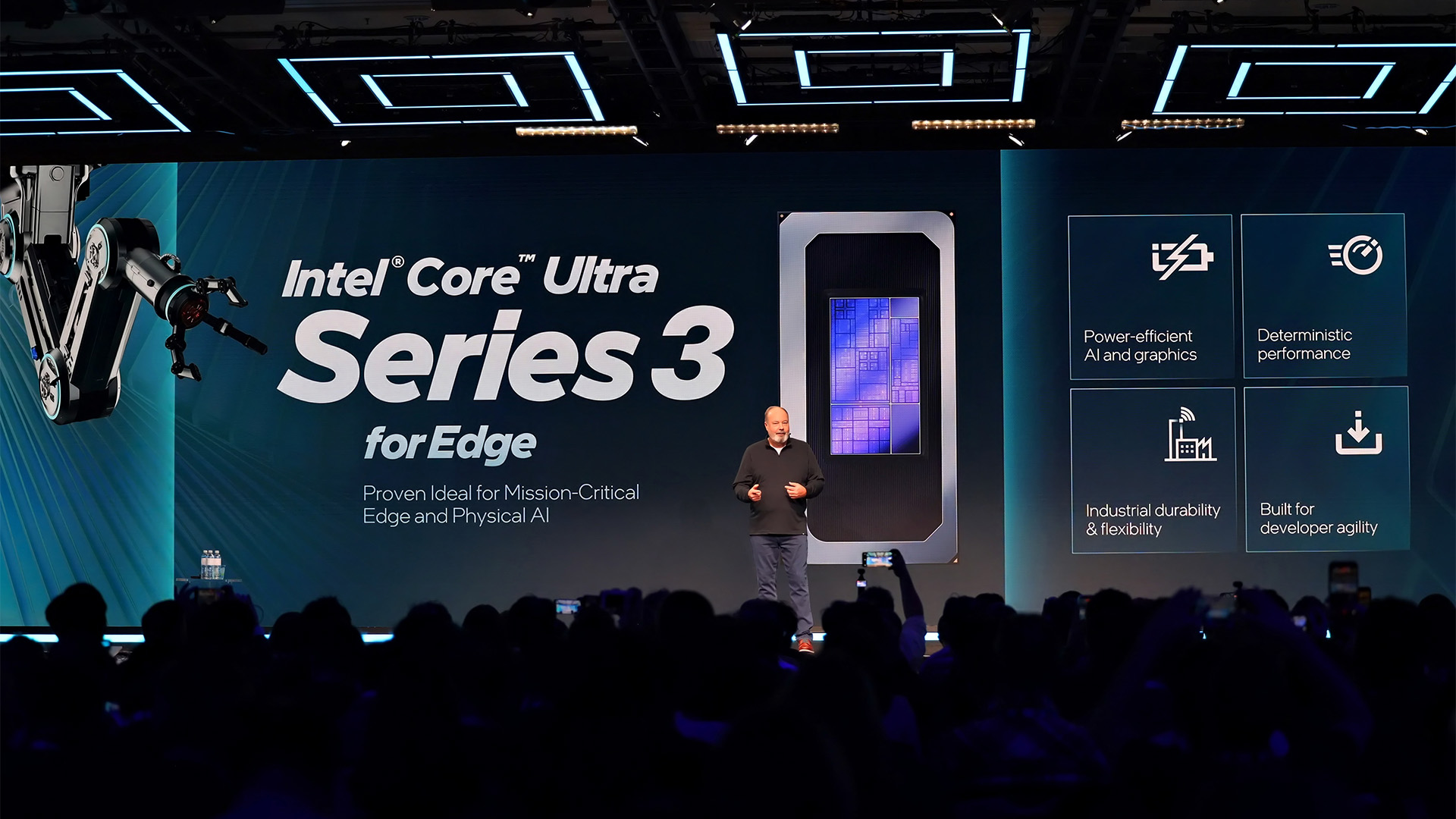
Intel Core Ultra Series 3 was unveiled by Intel CEO Lip-Bu Tan during the company’s keynote presentation at the show. Senior VP and general manager of the Intel client computing group Jim Johnson ran through some of the spec, including the news that the low-power, high-performance chip “delivers 60% more performance than Lunar Lake Series 2.” That’s not to be sniffed at.
To make sure we know Intel means business when it comes to gaming, VP & Fellow at Electronic Arts Jeff Skelton hit the stage to talk about the company’s work with Intel and Panther Lake on Battlefield 6. Skelton delivered one of the most telling lines in terms of the scale of what Intel has achieved with the Intel Core Ultra Series 3. “I’ve been making games for a very long time and if you told me a few years ago I’d be up here on stage with Intel talking about how well our games run on integrated graphics, I wouldn’t have believed you,” he said. “The performance we see on Panther Lake is remarkable.”

So what are we dealing with here? The technical hook is that Panther Lake is the first Intel CPU built on 18A process technology, described as the most advanced process node in the US. In practice, Intel has gone all out to build a chip with an on-board GPU capable of going toe to toe with discrete graphics, delivering blistering AI and gaming performance without getting hot under the collar. If we’re really lucky this could be the beginning of the end for hulking great gaming laptops that stretch the definition of portability.
The integrated graphics on the Intel Core Ultra Series 3 chips are built on Intel Xe3 architecture, with up to 12 Xe cores, and support the latest iteration of Intel® XeSS 3 (Xe Super Sampling 3), the AI upscaling tech that has already earned its place in the toolboxes of countless game developers striving to squeeze every last drop of performance out of their games. Historically, there was a sense that onboard graphics were almost an afterthought, and represented an inevitable compromise, to the detriment of performance. A discrete GPU was always the way to go if performance really mattered, surely. But, like Copernicus said, there is no certainty so certain that it can’t be challenged.
There will always be a place for big rigs and heavy-hitter discrete graphics playing AAA games with bleeding-edge ultra HD visuals, but with the Panther Lake reveal, the gap has grown smaller. Laptops that can play demanding games well can now be lighter and quieter, without fan noise or huge power bricks. In a new dawning age of portable PC gaming, Intel just blew the field wide open. The real winners? Gamers, of course.









 English (United States)
  Spanish (Argentina)
  English (Australia/New Zealand)
  German (Austria)
  Portuguese
  English (Canada)
  Spanish (Chile)
  Chinese (China)
  Spanish (Colombia)
  English (Denmark)
  Arabic (Egypt)
  English (Finland)
  French
  German
  English (India)
  Indonesian
  Japanese
  Malay
Malay  Spanish (Mexico)
  English (Netherlands)
  English (Norway)
  Spanish (Peru)
  Tagalog (Philippines)
  Polish
  Arabic
  Korean
  Spanish (Spain)
  English (Sweden)
  English (Switzerland)
  Chinese (Taiwan)
  Thai
Thai  Turkish
  English (UK)
  Vietnamese
  Italian