
Pure co-op shooter fun is back on the menu with the reboot of Painkiller for PC and consoles. Landing in the hands of FPS fans a full 21 years after the legendary original, this reimagining promises to crank up the no-holds-barred gameplay with freaky beasts, gothic vibes, and splattery death for up to three players online. Intel Gaming Access caught up with Damian Wyspiański, creative director, and Barbara Łannik, executive producer on Painkiller at developer Anshar Studios, to spill some demon blood.
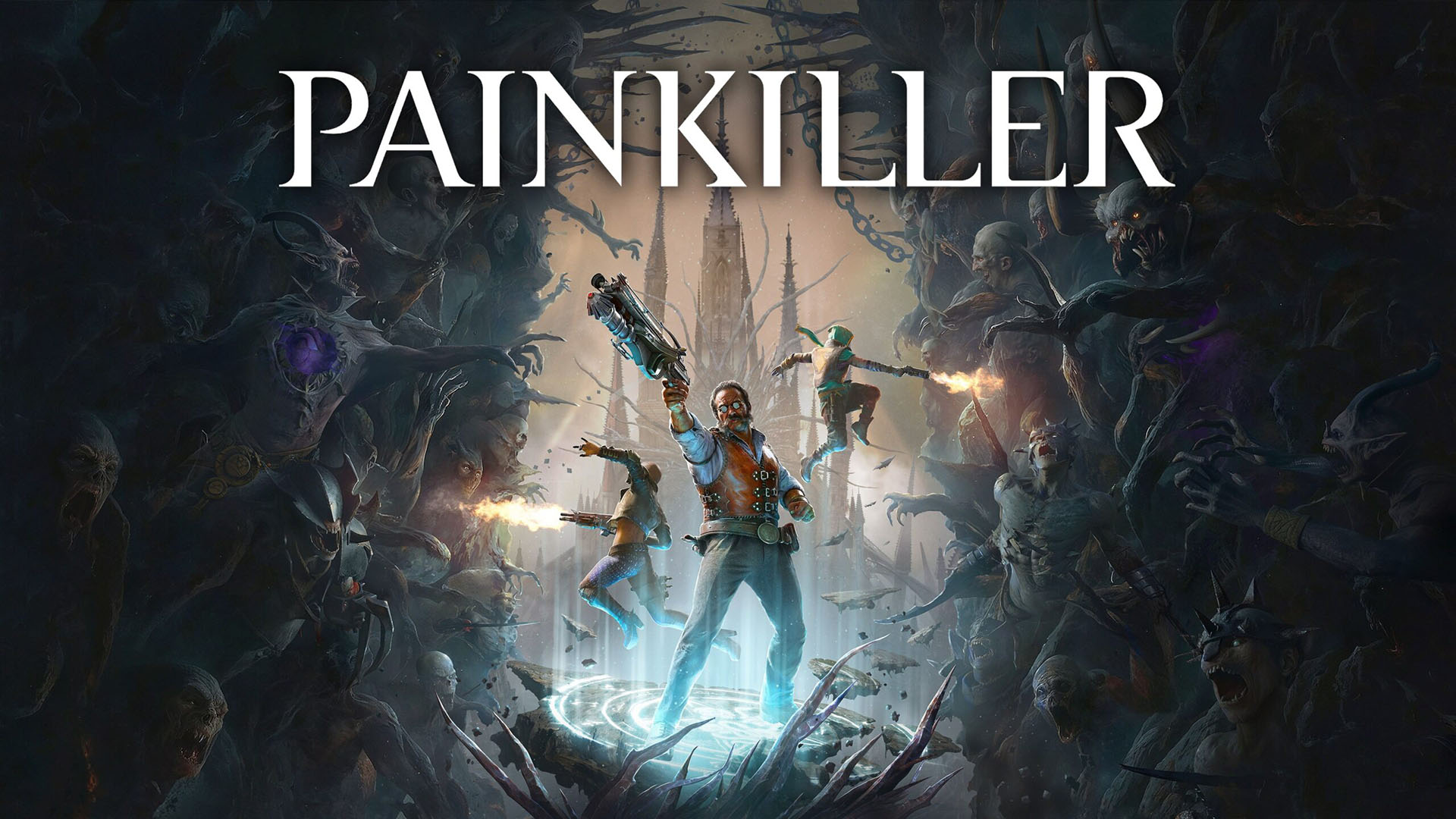
"Painkiller is designed for players who want to dive into chaotic, visceral action with friends. It blends classic shooter intensity with modern co-op gameplay, offering a dynamic experience built around mobility, teamwork, and pure fun,” says Łannik. “If you’re into adrenaline-fueled combat and don’t mind a bit of mayhem, this one’s for you.”
As you would expect for the reboot, Painkiller is inspired by classic shooters including the original 2004 game. “Our goal was to blend fast-paced, skill-driven gameplay with modern co-op mechanics, resulting in a movement-focused co-op shooter,” says Wyspiański. “Unlike co-op games that rely on tactical pacing or cover systems, Painkiller prioritizes agility, momentum, and visceral combat. It’s about staying mobile, reacting quickly, and working as a team, without losing the chaotic energy of old-school shooters.”

No FPS would be complete without a formidable arsenal of weapons at your disposal, with each one in Painkiller equipped with alternate fire modes and elemental effects. “The real fun kicks in when you start combining these with your teammates, creating chaotic, strategic combos that keep combat fresh and unpredictable,” says Wyspiański. “It’s all about experimenting, syncing up, and turning every fight into a playground of destruction.”
Undeniably fun though it is, there’s more to Painkiller than just shooting the heck out of everything with an evil glint in its eye. Movement and momentum are critical to outmaneuvering the demon hordes. “Players can use wall jumps and other traversal mechanics to reach high ground, cross wide gaps, or reposition quickly during combat,” says Wyspiański. “The arenas are designed to reward creative navigation, allowing players to chain movement skills and stay fluid, unpredictable, and always ahead of the action.”

A lot of effort has gone into ensuring that even in co-op play, players can find satisfaction in their own, individual gameplay. “One of the biggest challenges was combining the feel of a classic shooter with the dynamics of co-op gameplay,” says Wyspiański. “In traditional shooters, the player is a one-person wrecking crew, while in co-op, success depends on teamwork and coordination. Balancing those two extremes — making players feel powerful while still needing their squad — was tough.”
“We approached it by designing two distinct experiences: Solo play with bots focuses on survival, where every move counts and you’re constantly under pressure; and in co-op, it’s about dominating the arena together, syncing abilities, and unleashing chaos as a team,” continues Wyspiański. “That shift in mindset helped us preserve the intensity of classic shooters while embracing the spirit of co-op.”

Knowing full well that PC players expect flawless performance on their rigs, the Anshar team doubled down on optimization. “Painkiller is a first-person cooperative shooter focused on extremely fast-paced movement, making performance a top priority for us,” says Łannik. “We’ve dedicated significant effort to optimizing both system requirements and in-game content. For the best experience on PC, we recommend reviewing our minimum and recommended specs, but you can also take advantage of the extensive settings options we’ve provided, including Intel Xe Super-Sampling (XeSS) support for Intel graphics card users.”
The team worked hand-in-hand with Intel to deliver the target player experience with XeSS implementation. “Working on Painkiller wasn’t our first collaboration with Intel, but it was our first time partnering on a project of this scale and with such high expectations,” says Łannik. “After initial discussions and defining our development constraints — like using Unreal Engine 4.27 — we decided to implement XeSS 2 into the game. Intel’s support proved invaluable.”

“We anticipated multiple scenarios and extensive testing before reaching the desired results, but in reality, the plugin supplied by Intel worked almost out of the box,” continues Łannik. “In this case, our prior optimization efforts and Intel’s precisely tailored solution came together seamlessly.”
Mit Painkiller being a co-op shooter, players are in line to get the royal post-launch treatment, with gallons of additional juice to keep those trigger fingers pumping. “We’re not done with Painkiller at launch,” assures Wyspiański. “We’re planning smart, focused updates, tweaks, polish, and a few additions to keep the action sharp.”
“Most importantly, we’re listening,” adds Łannik. “Community feedback will help shape what comes next, making sure the game evolves in ways that actually matter to the people playing it.”
Hold my beer, there’s a demon I need to kill.






 English (United States)
  Spanish (Argentina)
  English (Australia/New Zealand)
  German (Austria)
  Portuguese
  English (Canada)
  Spanish (Chile)
  Chinese (China)
  Spanish (Colombia)
  English (Denmark)
  Arabic (Egypt)
  English (Finland)
  French
  German
  English (India)
  Indonesian
  Japanese
  Malay
Malay  Spanish (Mexico)
  English (Netherlands)
  English (Norway)
  Spanish (Peru)
  Tagalog (Philippines)
  Polish
  Arabic
  Korean
  Spanish (Spain)
  English (Sweden)
  English (Switzerland)
  Chinese (Taiwan)
  Thai
Thai  Turkish
  English (UK)
  Vietnamese
  Italian