
Jump scares, atmospheric dread, and frantic action are some of the moments we LOVE about the horror genre in gaming. With Halloween season here, there’s no better time to turn down the lights and load up something spooky!

For this Halloween season, the Intel® Core™ Ultra 7 270K Plus delivers a standout consistency story. Across all three horror games we tested, it delivered higher 1% low frame rates than the competition, with advantages of up to 16%. And that consistency holds up even as average FPS becomes increasingly GPU-limited at higher resolutions.
The real scare is in the 1% lows
Average FPS (frames per second) tells you how much performance your system delivers across a test. But an average can hide the stutters and frame rate drops that can interrupt your gaming experience. If a game runs super-fast most of the time, the resulting FPS will be fairly high and any stuttering will be masked by that average.
That’s why 1% lows are as important, if not more important to look at, than average FPS. 1% lows represent the performance of the slowest 1% of frames during gameplay, exposing how bad performance gets during dips. For example, if the average is 140 FPS but the 1% low is 40 FPS, that means the game is dropping 100 FPS in the slowest moments resulting in a stutter or freeze when that drop happens.
Higher 1% lows generally indicate better performance during the slowest moments of gameplay. This means less severe frame-rate dips and more consistently smooth motion. Looking at 1% lows alongside average FPS adds important context to understanding your gaming experience
At 1440p and 4K, many games place more of the performance burden on the graphics card, often narrowing differences in average FPS between different CPUs. In these scenarios, looking for consistent 1% low results are especially notable because the CPU can still influence performance during the slower portions of the game.
1080p: A strong opening act
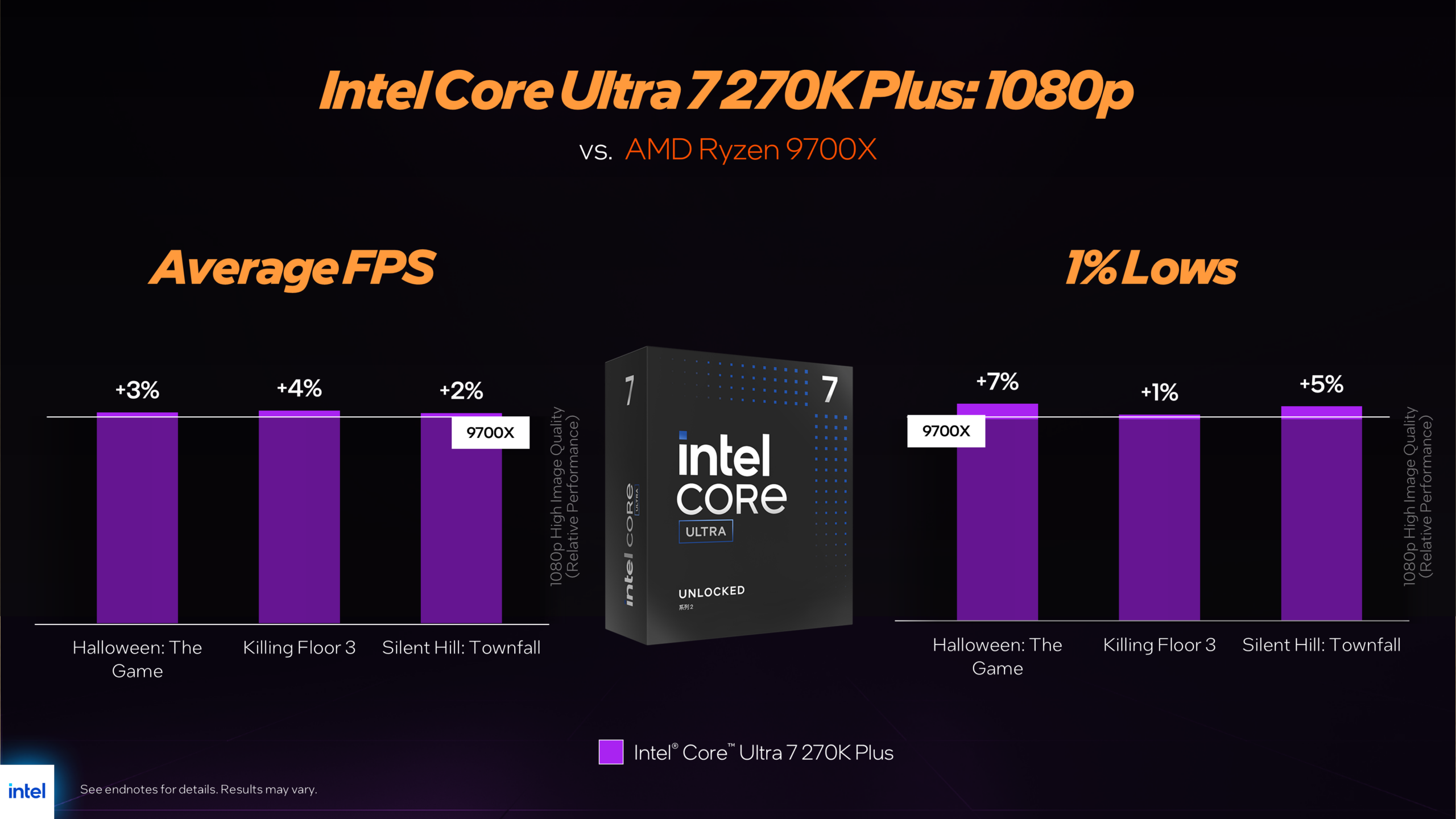
At 1080p High, the Intel Core Ultra 7 270K Plus has similar performance to the Ryzen 7 9700X in average FPS across all three tested titles. However, the 1% low results show a different story with Intel leading by up to 7% in Halloween: The Game, and 5% in Silent Hill: Townfall.
1440p and 4K: The plot thickens
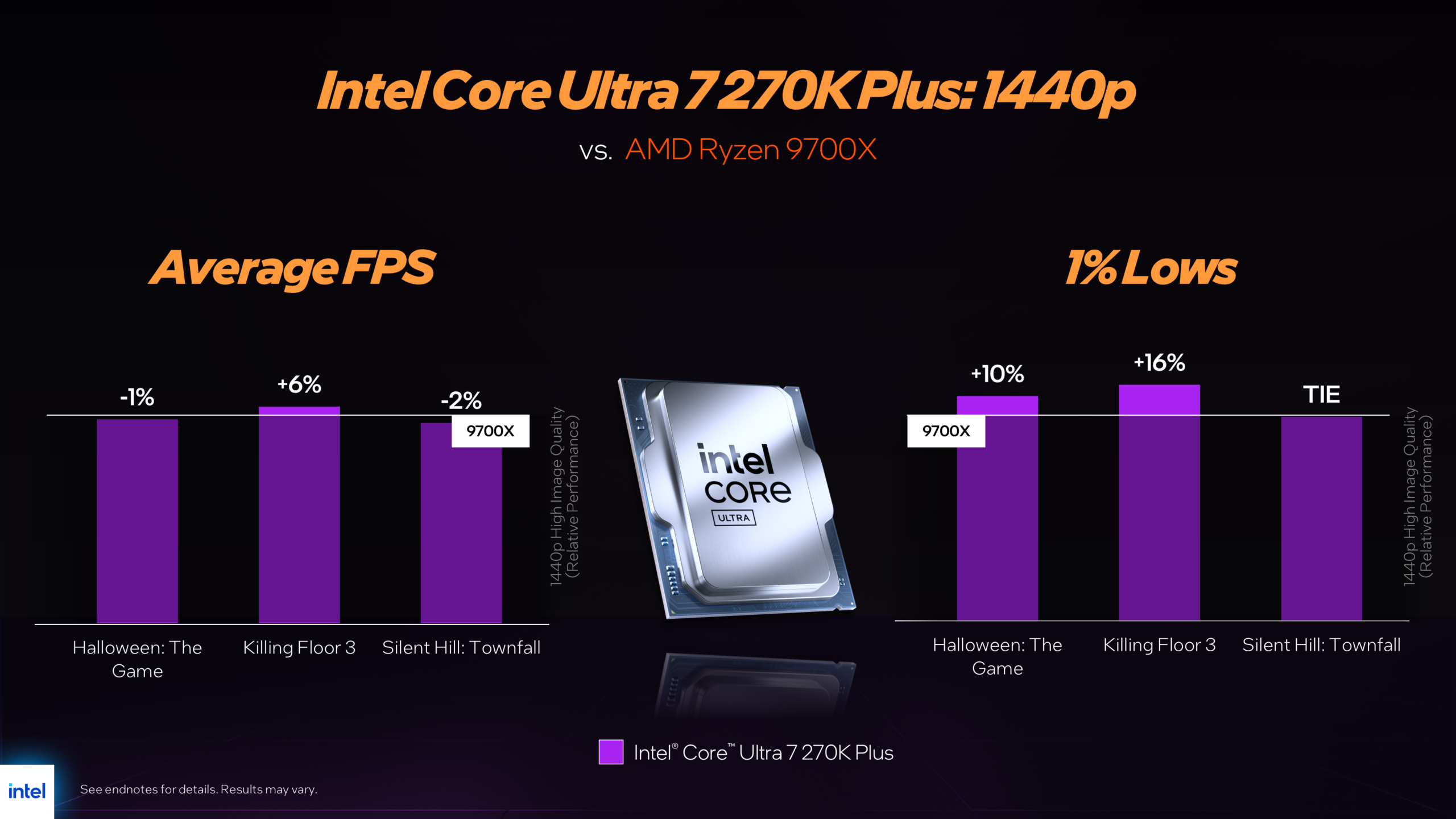
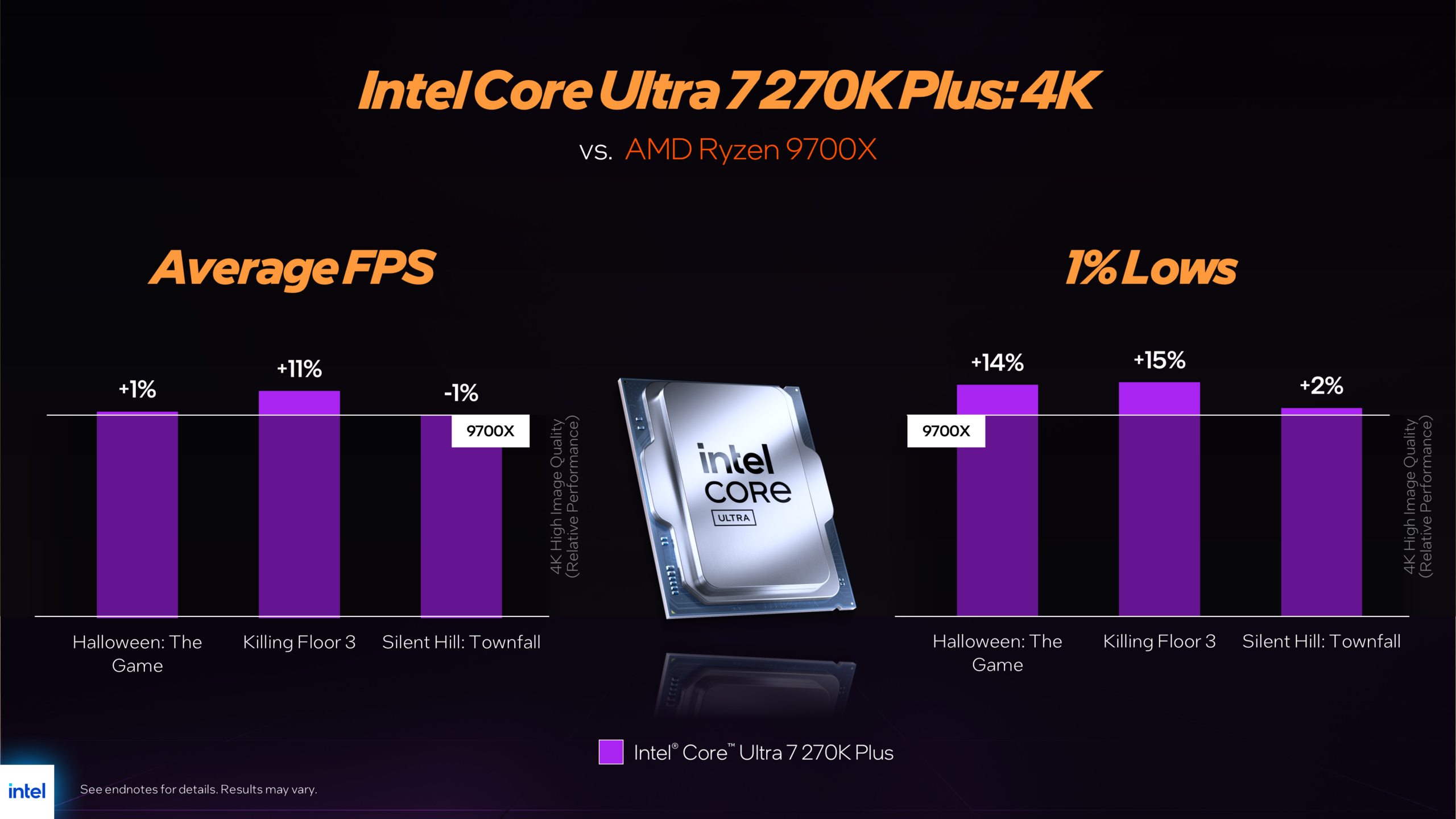
At 1440p and 4K, average-FPS results become more mixed as the GPU takes on more of the workload. The 1% lows tell a much more consistent story, with the Intel Core Ultra 7 270K Plus showing higher results in nearly every tested game at both resolutions.
Killing Floor 3 is the standout example: Intel delivers approximately 6% higher average FPS and 16% higher 1% lows at 1440p. At 4K, those advantages increase to approximately 11% and 15%, respectively.
Halloween: The Game reinforces the value of looking beyond average FPS. Intel delivers 10% higher 1% lows at 1440p and 14% higher 1% lows at 4K, which should result in a much smoother gaming experience
A Halloween treat for performance-minded players
Intel’s lead in 1% lows, with an advantage reaching up to 16% across these tested games, means a smoother real-world gaming experience overall.
For your next spooky lights-out gaming session, remember that average FPS doesn’t tell the whole story and beware the 1% lows.
Experience the scares yourself, download and play today: