
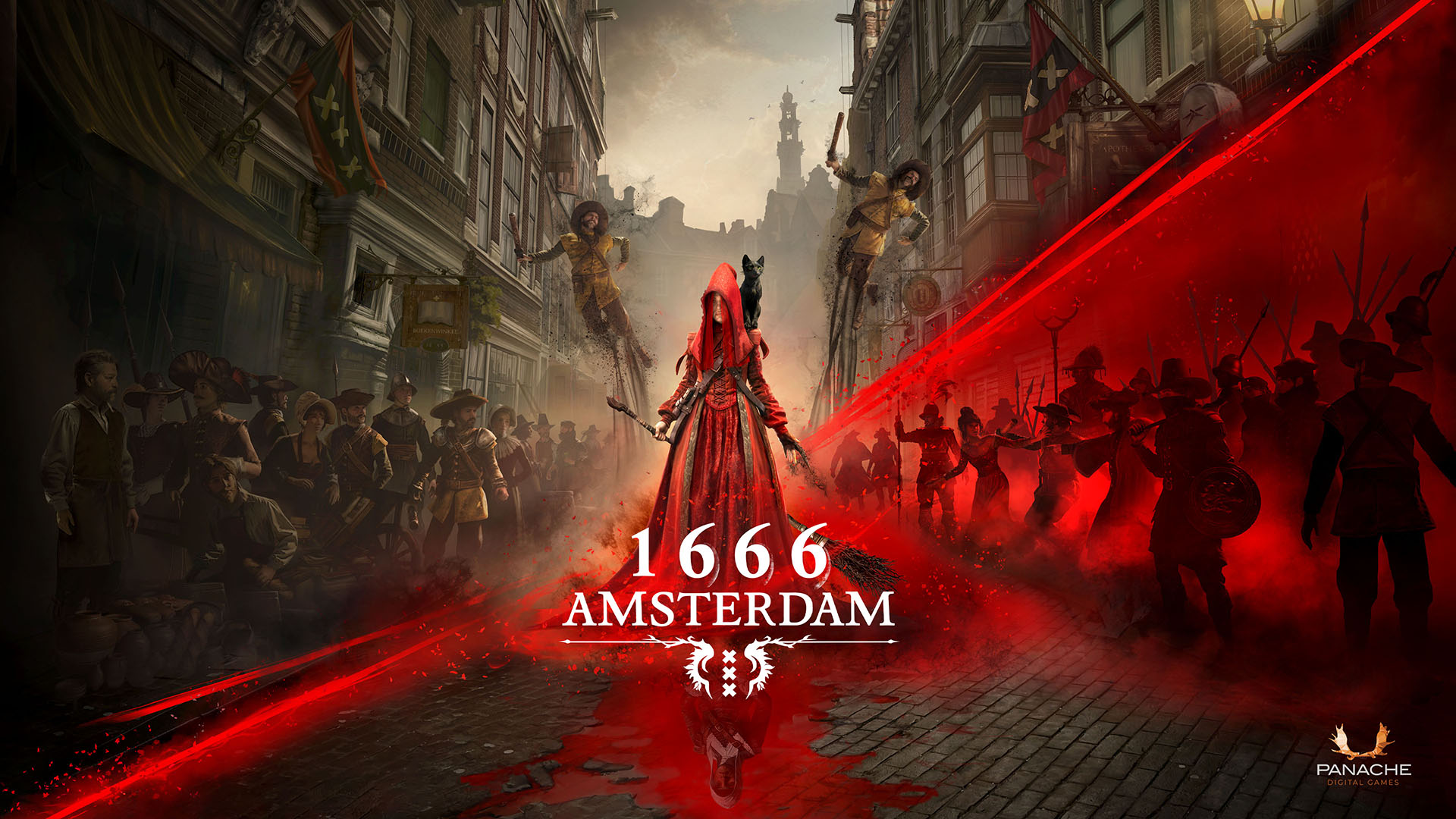
In this time-hopping title from Montreal-based studio Panache Digital Games, the hauntingly beautiful city of Amsterdam hides a secret demonic presence.. When 1666: Amsterdam heads to early access later this year, your chance will come to uncover the mystery. Until then, we have a few tantalizing hints to drop, courtesy of Patrice Désilets from Panache.
Désilets is the visionary creative director behind Assassin’s Creed, Assassin’s Creed II and Assassin’s Creed: Brotherhood as well as the director of Prince of Persia: Sands of Time. He founded Panache Digital Games in 2013. “Panache prides itself on making original IPs that push the limits of what interactive entertainment can be,” Désilets says. “Our first game, Ancestors: The Humankind Odyssey, sold over 2.5 million copies to date, and defined the studio’s design signature. We announced our second original IP, 1666: Amsterdam, in June of this year.”
Inspiration for the new title struck on a trip Désilets took to Amsterdam 16 years ago, and has been nurtured into a complex and cinematic work. “1666: Amsterdam is the story of Noa Brooklyn,” Désilets tells us, “a young woman born into the Zaindaris lineage, destined to become the Collector. Her mission: to track demonic entities known as the Originals, hiding among the citizens of Amsterdam behind ordinary faces, and take back a power that was never theirs to keep. She’s not alone. Aaron, summoned from 1999 into the body of a cat, stands by her side.”
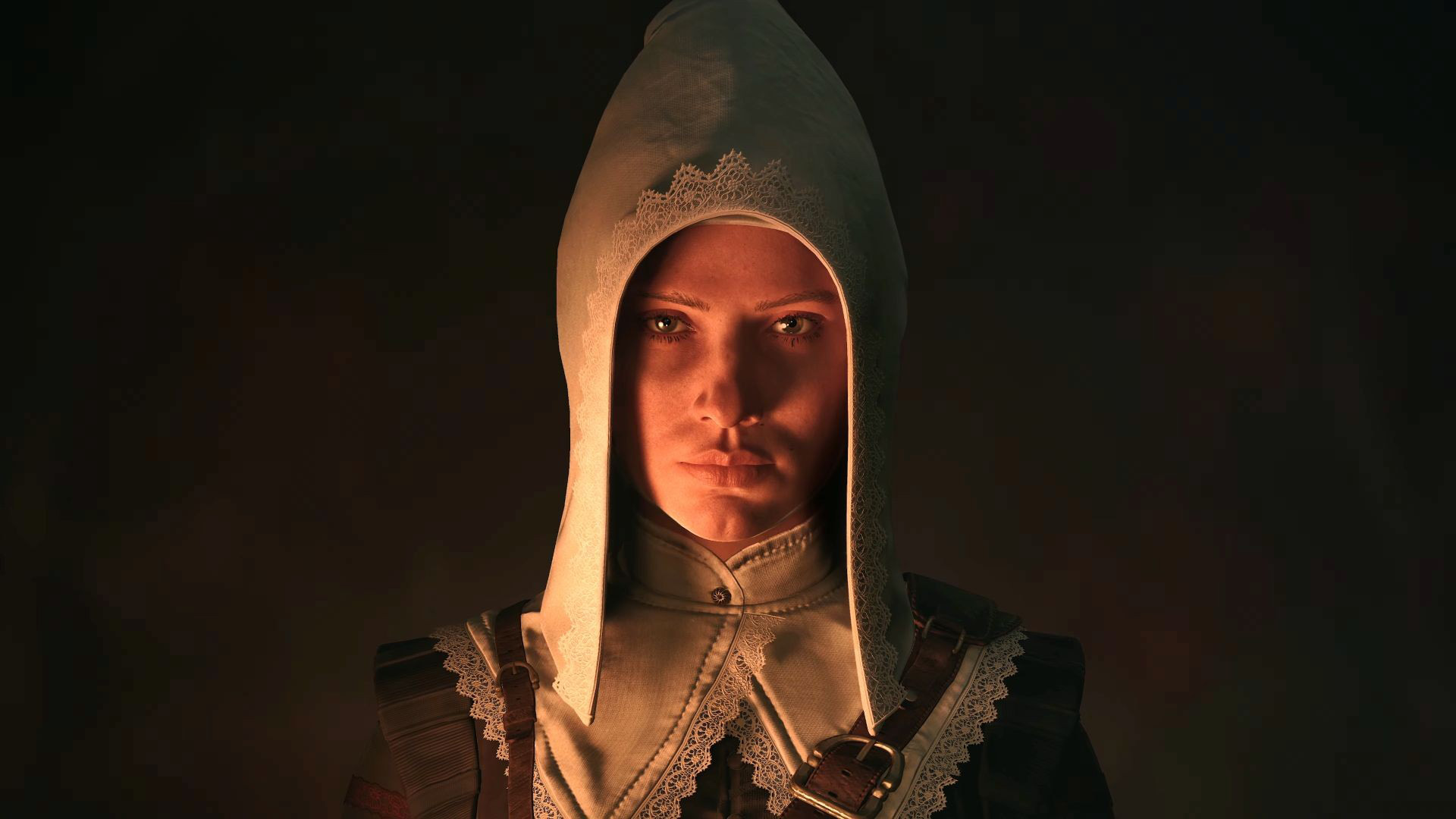
Play the demo and you notice immediately the depth of the visuals. You get the feeling that you’re stepping into a painting by one of the Dutch masters—albeit one with another story beneath the surface layer of paint. “This is a game for those who love rich worlds to decipher,” Désilets continues, “stories that don’t hand you all the answers, and gameplay that rewards curiosity and observation over pure reflexes. If you’ve ever loved the feeling of discovering a world that hides as much as it shows, this game is for you.”
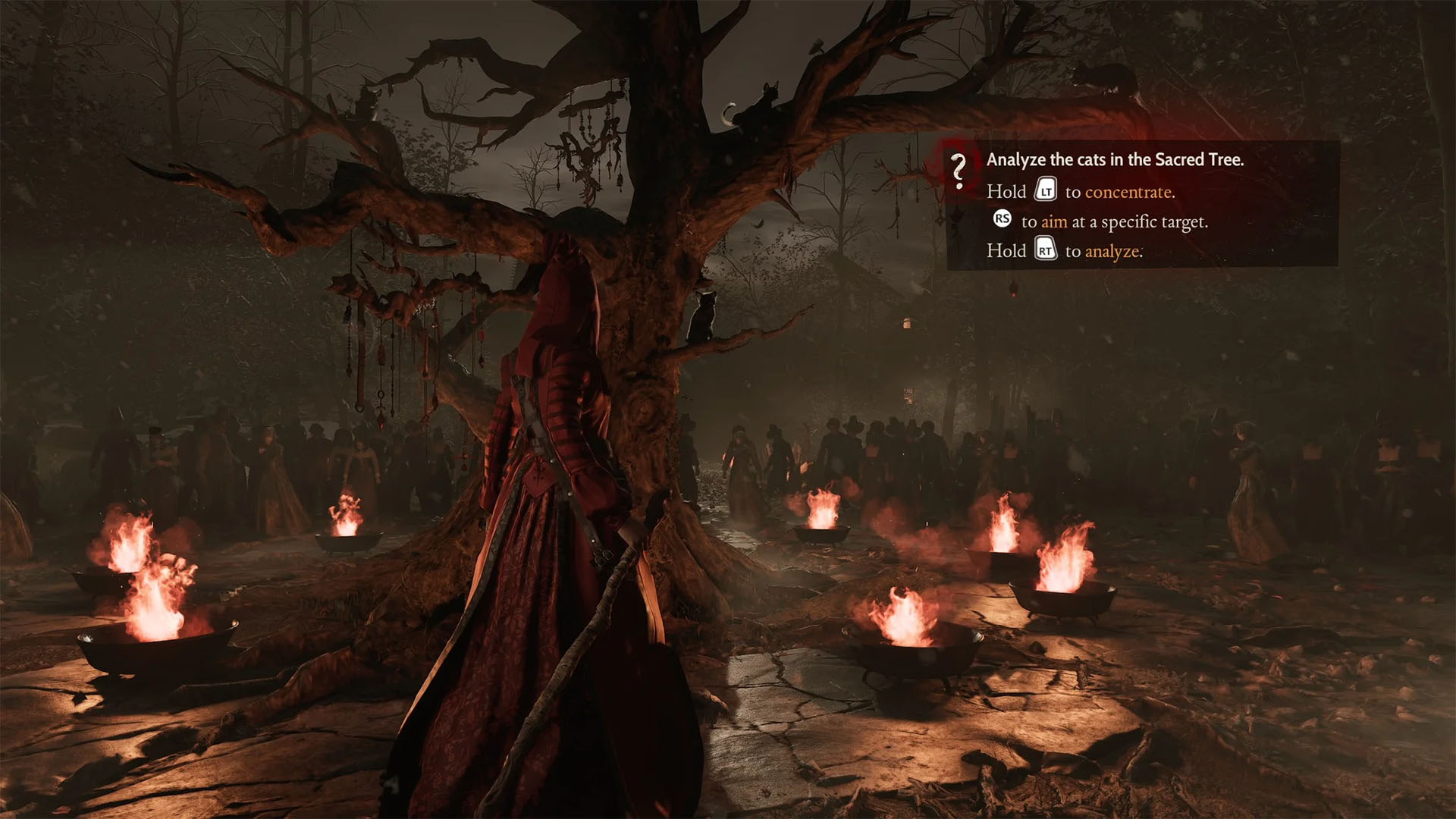
Désilets’ fascination with time runs through 1666: Amsterdam like a golden thread. “What sets 1666 apart is its structure across three timelines: 1666, 1999, and the present day, all connected by the same mystery,” he explains. “The day/night cycle—where you investigate during the day and confront the Originals during the Esbat [at full moon]—and the Noa/Aaron duo, offering two radically different ways to play. We don’t know of any other game that features a cat as a full-fledged infiltration mechanic.”
The interplay between day and night goes further than light and dark; as Désilets puts it: “What you discover during the day determines how you survive the night”. During the day, you roam the streets of Amsterdam trying to uncover the identities of the Originals. You explore historic houses, conduct interrogations, and unlock skills. “At night,” Désilets continues, “the Originals reveal their true nature and you confront them with everything your investigation has uncovered. Every Original is a different fight. Players can look forward to a game that feels like nothing else. A world that has secrets worth finding.”
While the vision for the game has remained strong since its inception, there’ve been challenges along the way. “The day we were supposed to kick off development on 1666 ended up being the day everyone was sent home due to the Covid-19 pandemic,” Désilets recalls. “Since we weren’t set up to work from home, we had to adapt very quickly. Strong communication became critical to set up new pipelines, feature development progress, and ensure information was shared effectively with the entire team. Those early challenges helped us put in place flexible workflows that now give Panache a strong hybrid model.”
A rock-solid team is something to value, and Désilets is unstinting in his praise of his fellow artists. “People don’t talk enough about the team,” he argues. “Around 70 people worked on this game, and to me, they are the champions of their craft. The vision was wild, and they brought it to life. I’m immensely proud of this team and humbled to have grown with them.”
The team’s vision shaped in-game performance as well. “Our goal is to have a stable frame-rate with visual quality that fits our art direction,” Désilets explains, “rather than get the highest frame-rate possible.” Smooth and stable was the aim and Intel was there to lend the necessary support. “This is the first time Panache has teamed up with Intel and we’re super happy with the support,” Désilets says. “XeSS integration was smooth and easy. Our contact at Intel helped supply some hardware for us to test on, and ran some compatibility tests in their labs. That kind of support is extremely useful for us. Thanks!”
Our pleasure, Désilets. We’re on tenterhooks waiting for 1666: Amsterdam’s early access release. Meanwhile, there’s a chance to revel in the world of the Prologue, in a free demo—and choose a companion for your journey. Choose wisely… the world hangs in the balance..
Access the demo on Steam.